

Guide 02 · Updated October 10, 2026
Do septic tank treatments like Rid-X work?
None of the agencies we read recommends septic additives, and Rid-X itself is sold to go along with pumping. Here is what each source says, with its date, so you can weigh the monthly dose yourself.
By the editors of Rid-X Septic Guide · Published October 10, 2026 · 6 min read
Key points
- Asked whether septic additives are recommended, the EPA answers no.
- Penn State, Minnesota, WSU and Kentucky agree that pumping does work no additive does.
- Washington lists several Rid-X septic products as unlikely to cause harm. That is a finding about harm, not about results.
- Odor killers with formaldehyde work by killing bacteria. Biological products are a different group.
You flush Rid-X, or you are thinking about starting, and you want to know whether it does anything for the tank. That is a fair question. The people best placed to answer it are the EPA and the university extension services that advise homeowners on septic systems, so we read what each of them has published on additives. Not one of them recommends adding anything to a working household tank.
We also read what Rid-X says about its own products, and we quote it as the maker's claim. We did not test Rid-X, and none of the sources below tested it by name. Dates matter here more than usual. The papers run from a 1999 EPA alert to a 2024 EPA fact sheet, and the newest one is a little more open about biological additives than the oldest.
What the EPA says
The EPA's frequent questions page asks whether additives are recommended for septic systems and answers: "No." Its reason is that a household tank already holds a significant presence of bacteria, enzymes, yeasts, fungi and other microorganisms. The page adds that additive products can be ineffective or even harm system operation and the environment, and that the agency does not make recommendations on individual septic system products.
Its septic tank additives fact sheet, updated in 2024, keeps that position and gives reasons. Some products may interfere with the breakdown of waste, clog the system or pollute groundwater. Systems already contain the microorganisms they need. Products sold as cleaners, decomposers, deodorizers or digesters may have only limited third-party research behind what their makers claim. And several states keep their own lists of additives they allow.
That same 2024 sheet is also the one federal document we found that gives biological additives any credit. Some biological additives can reduce septic tank scum and sludge, it says, but the impact of long-term use on the soil's ability to treat wastewater is unknown. It does not name Rid-X. It also does not say that less scum makes a system work better, and we would be stretching it if we did.
The EPA's homeowner's guide from September 2012 is blunter. It says the effectiveness of additives that claim to remove the need for pumping has not been determined, and that many studies show additives have no significant effect on a tank's bacteria. In its words, periodic pumping is "the only true way" to keep a septic system working properly.
What Penn State, Minnesota, WSU and Kentucky say
Penn State Extension's page on septic tank pumping, updated in July 2023, says biological and chemical additives are not needed to aid or accelerate decomposition. On one point it goes further than the EPA: relying on additives rather than conventional pumping may result in failure of the entire septic system.
The University of Minnesota's septic program sorts the products into starters, feeders and cleaners. Starters, it says, are not necessary, will do no harm, and cost the homeowner money. Feeders neither harm nor benefit the system. Cleaners that stir settled solids back up can push them into the drainfield and damage it for good. The program's bottom line is to spend the money on cleaning the tank. A federal or state stamp on a label, the program adds, means only that the product lacks hazardous substances, not that anyone recommends it.
Washington State University Extension in Clark County wrote its additives page in August 2006. A dose of added bacteria, it points out, is small next to the bacteria already living in the tank. It also cites a 1999 study of 48 tanks that found no difference in sludge level with or without additives. Its summary is worth reading twice: "Safe additives will likely be ineffective, while an effective additive will likely be unsafe to use."
The University of Kentucky's 2012 paper on additives comes closest to a middle view. Biological additives do not significantly enhance normal decomposition, it says, although some have been found to degrade or dissipate scum and sludge. Its conclusion is that additives have little positive effect on septic system performance, may in some cases be harmful, and that the best advice is pumping every three to five years.
What Rid-X says about its own products
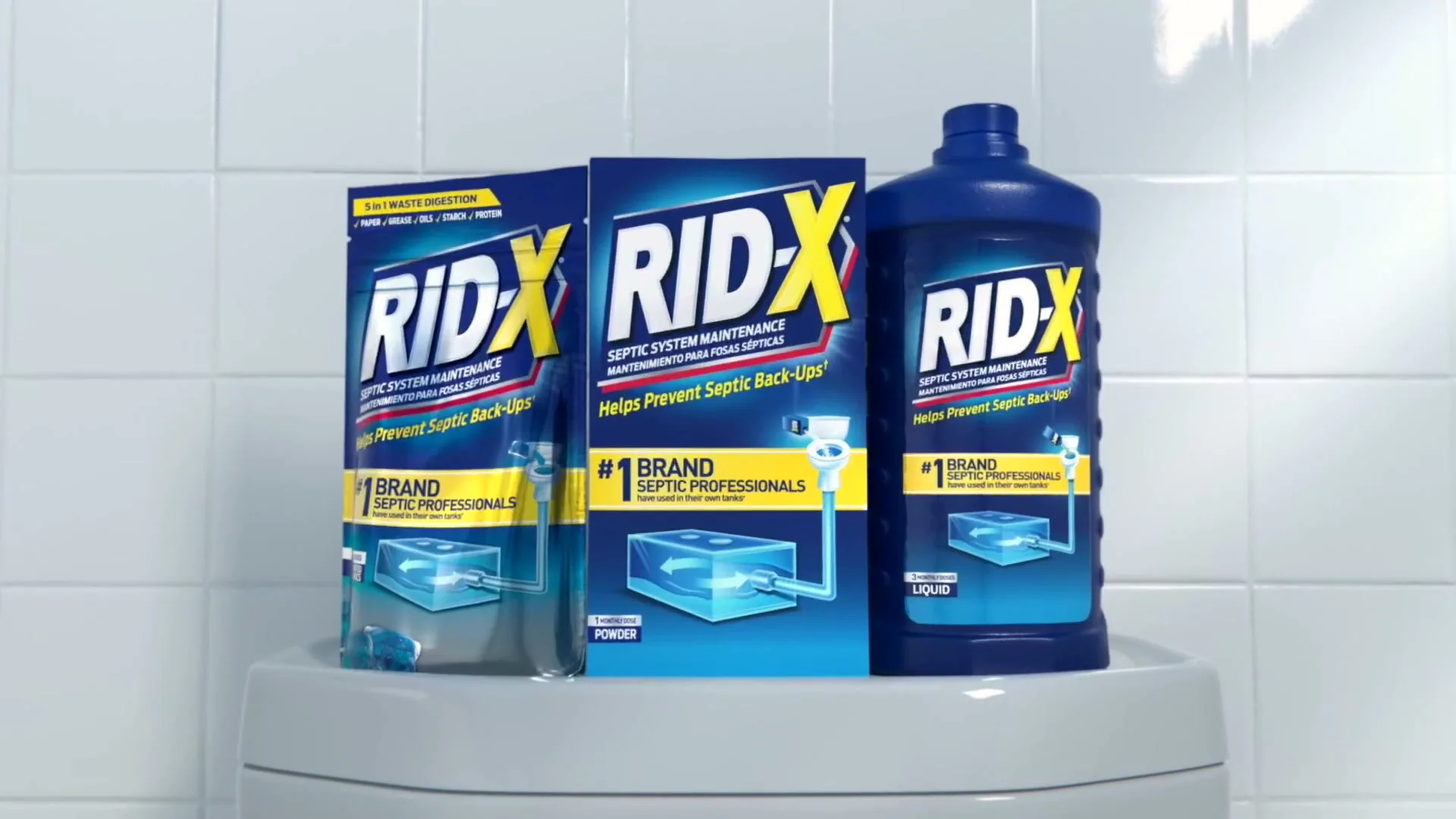
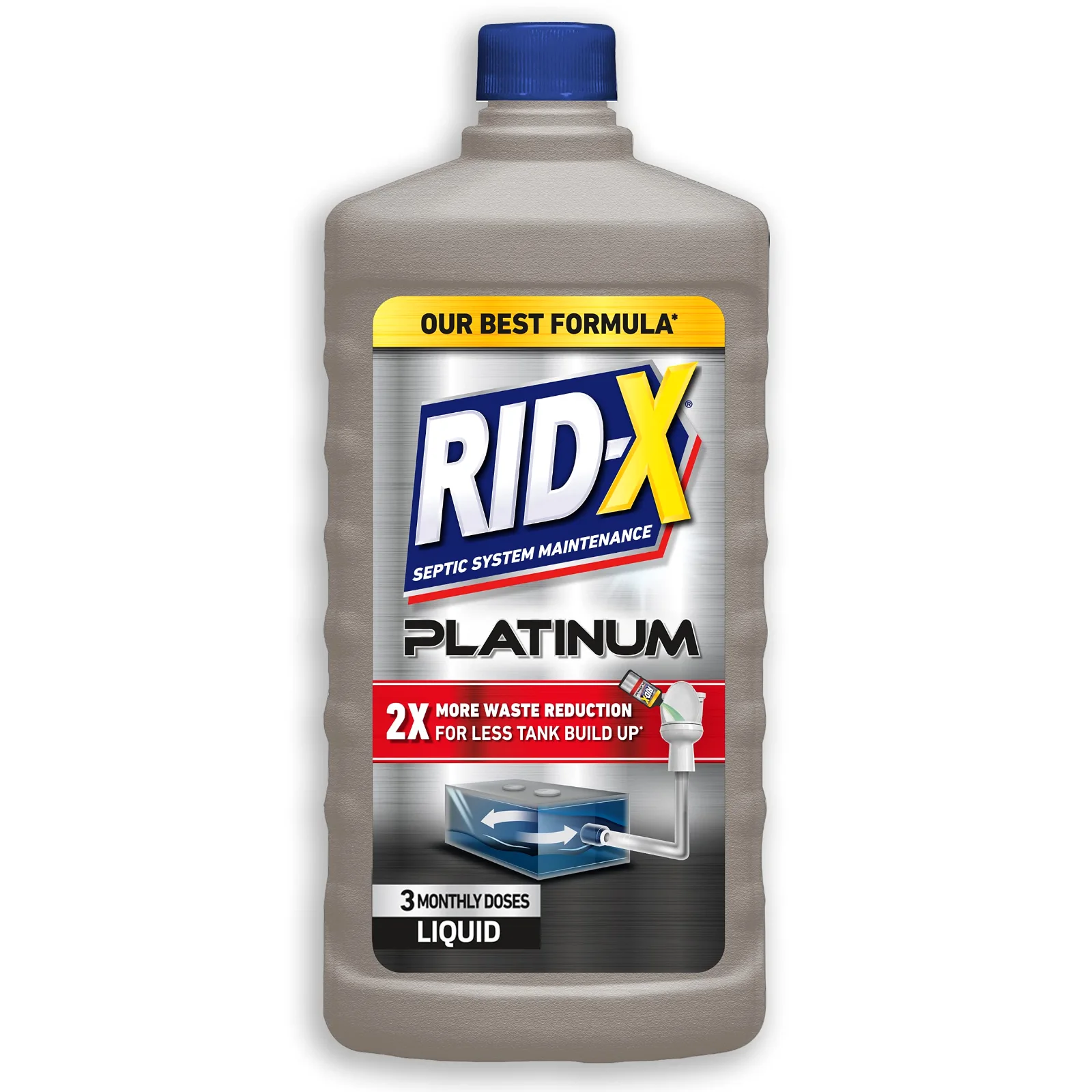
Rid-X says its septic products hold natural bacteria and enzymes in what it calls a dual-action formula, with the enzymes working at once and the bacteria working longer. It says they break down toilet paper, grease and other waste. It calls Platinum its most powerful formula and claims 2x more waste reduction than Rid-X powder, a figure its fine print ties to a 21 month study against the powder.
The same fine print, and the maker's television spot, carry the words "along with occasional pumping". Read fairly, the maker is not telling you to skip the pump-out. Where Rid-X and the agencies part ways is on whether a monthly dose adds anything that a working tank lacks, and on that question none of the sources above backs the maker.
-
12 monthly doses
$5.79 per month
$69.45 for 12 months

What Washington's additive list means
Washington State bans the use, sale and distribution of septic additives unless its Department of Health has reviewed them. The legislature explained its reasons back in 1993. Most additives, it wrote, do not have a positive effect on on-site systems, and they can contaminate groundwater, leave drainfields unable to work and lead to costly repairs.
The department's December 2024 list includes several Rid-X septic products, among them Septi-Pacs, the concentrated powder pacs and Platinum. The Rid-X Holding Tank Deodorizer is not on it. Read the list for what it is. The review looks for harmful ingredients, and a product on the list has ingredients judged unlikely to cause harm. The department does not test whether a product works, and it says the list must not be read as certifying effectiveness or recommending use. Makers may not even put the word "approved" in their advertising.
Odor killers and bacterial treatments are not the same
Additives do not all work the same way, and the sources treat the groups differently. Odor-control products often contain formaldehyde, paraformaldehyde, quaternary ammonia or zinc sulfate, the EPA's 2024 fact sheet says, and they work by killing bacteria. Kentucky's paper points out that this runs against the purpose of the tank, and that a septic tank in good order does not smell, inside the house or out.
Biological products, the kind Rid-X describes, add bacteria and enzymes instead. These are the products the 2024 fact sheet and the Kentucky paper describe as able, in some cases, to reduce scum and sludge. An EPA Region 9 alert from July 1999 took a harder line. It quoted a 1957 federal finding that no known chemicals, yeasts, bacteria or enzymes could get rid of, or even shrink, the settled solids and the scum layer of a septic tank. According to EPA, the alert added, that was still true. When you meet that quote online, set its year beside the 2024 sheet.
A third group, drain openers and degreasers, worries every source we read. The fact sheet says some degreasers contain chlorinated hydrocarbons, such as methylene chloride and trichloroethylene, that many states ban outright.
Where that leaves you
Set the sources side by side and the honest summary is short. The agencies do not recommend additives. Your tank needs inspection and pumping whether you use one or not. If you choose to use one anyway, a biological product on Washington's list is the kind the sources describe as unlikely to do harm, which is a different thing from doing good.
Keeping Rid-X in the routine? Our page on how to use Rid-X once a month covers the dose, the timing and safe storage. Putting the money toward the tank instead, as Minnesota suggests? Start with the pumping schedule and the habits that keep solids and harsh chemicals out of it.
-
12 monthly doses
$3.79 per month
$45.54 for 12 months
| Source | Year | What it says |
|---|---|---|
| EPA, frequent questions on septic systems | Page updated 2026 | Additives are not recommended. A household tank already holds the microorganisms it needs. |
| EPA, septic tank additives fact sheet | 2024 | Not recommended. Some biological additives can reduce scum and sludge, but the long-term effect on the soil is unknown. |
| EPA, homeowner's guide to septic systems | 2012 | The effectiveness of additives that claim to replace pumping has not been determined. Periodic pumping is the only true way. |
| EPA Region 9, alert for RV, boat and mobile home owners | 1999 | Holding-tank deodorizers with formaldehyde can kill a septic system's bacteria. |
| Penn State Extension | 2023 | Additives are not needed. Relying on them instead of pumping may cause the whole system to fail. |
| University of Minnesota | Current page | Starters do no harm but cost money. Spend it on cleaning the tank. |
| WSU Extension, Clark County | 2006 | A study of 48 tanks found no difference in sludge. Safe additives are likely ineffective. |
| University of Kentucky | 2012 | Little positive effect. Some reduce scum and sludge. May be harmful in some cases. |
| Washington State Department of Health | 2024 | Several Rid-X septic products are on its list: ingredients unlikely to cause harm. Effectiveness is not reviewed. |
Whether or not the Rid-X catalog stays in the bathroom cabinet, the pump-out is the one step every source on this list agrees on.
Other guides
- Guide 01
How to use Rid-X once a month
Pods, powder or liquid, once a month5 min read - Guide 03
Plan septic inspection and pumping in a Rid-X house
Inspection, pumping and the signs to watch6 min read - Guide 04
Septic-safe habits to keep with or without Rid-X
What to flush, pour, park and plant near a tank6 min read - Guide 05
Using Rid-X Holding Tank Deodorizer in an RV or boat
Dose by tank size, then dump where waste belongs5 min read