

Guide 04 · Updated October 10, 2026
Septic-safe habits to keep with or without Rid-X
Most of what reaches a septic tank is decided at the toilet, the kitchen sink and the washing machine. Here is what the EPA, CDC and four extension services ask you to keep out, spread out and protect.
By the editors of Rid-X Septic Guide · Published October 10, 2026 · 6 min read
Key points
- Flush only human waste and toilet paper. Everything else goes in a trash can with a lid.
- Skip chemical drain openers, and keep grease, paint and solvents out of every drain.
- Fix running toilets first and spread laundry across the week.
- Keep vehicles off the drainfield, and test a private well once a year.
The EPA breaks septic care into four jobs: inspect and pump, use water efficiently, dispose of waste properly, and look after the drainfield. Three of the four happen in your kitchen, bathroom, laundry room and yard, every day, long before a pumper lifts a lid. What you flush, what you pour, how much water you send down on a Saturday and where you park the truck all reach the tank, and no monthly dose of anything changes those inputs.
If you use Rid-X, these habits sit alongside it. Rid-X's own fine print says the products are meant to be used along with occasional pumping, and the EPA's septic FAQ answers the question of whether additives are recommended with a plain no. The sources agree on what follows: keep solids, grease and harsh chemicals out of the tank, spread water use out, protect the drainfield, and test your well if you drink from one. The case for and against additives is laid out in Do septic treatments work?.
What you need
At hand
- Lidded trash can for each bathroom
- Sink strainer
- Empty can or jar for grease
- Drain snake
Rid-X products
- Boiling water for slow drains
Step by step
1Flush only human waste and toilet paper
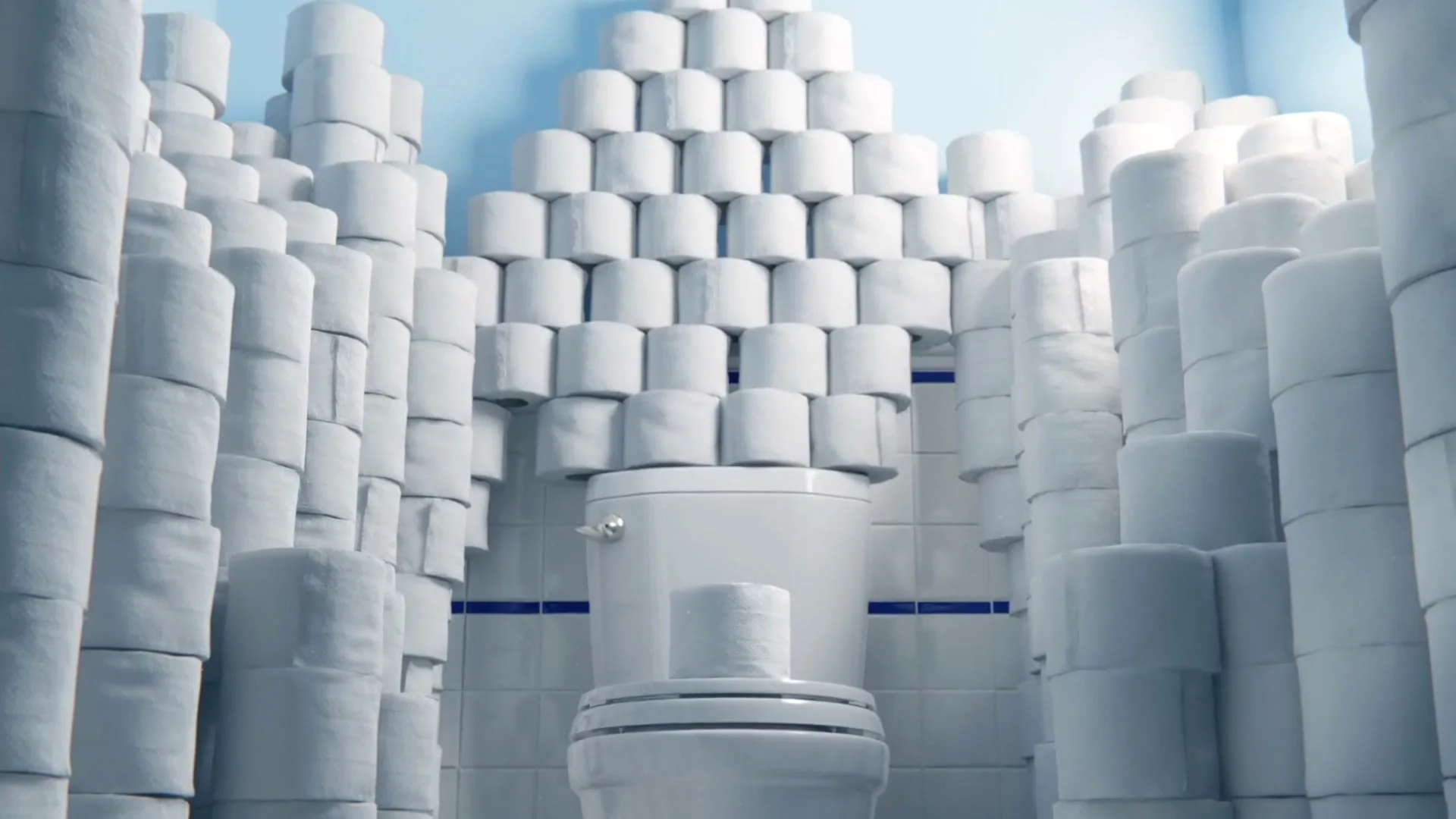
- Put a trash can with a lid beside every toilet, the guest bathroom included, so wipes, floss and hygiene products have somewhere to go.
- Learn the EPA's never-flush list: cooking grease or oil, non-flushable wipes such as baby wipes, photographic solutions, feminine hygiene products, condoms, dental floss, diapers, cigarette butts, coffee grounds, cat litter, paper towels, pharmaceuticals and household chemicals.
- Keep medicines out of the toilet too. Both the EPA and the University of Minnesota put medicines on their lists.
Tip: Point out the bin to guests, who may not know the house runs on a septic system.
2Think at the sink
- Let cooking grease cool, scrape it into a can or jar and put it out with the trash.
- Skip chemical drain openers. For a slow drain, the EPA suggests boiling water or a drain snake instead.
- Keep oil-based paints, solvents and large volumes of toxic cleaners out of every drain, and keep latex paint waste to a minimum. The University of Minnesota adds that the rinse water from latex paint rollers should stay out of the drain as well.
- The EPA's private wells page puts it in one line: never dispose of harsh chemicals, solvents, petroleum products or pesticides in a septic system.
Tip: A strainer in the kitchen sink keeps food scraps in the trash instead of in the tank.
3Use the garbage disposal less, or not at all
- Know what a disposal costs the tank. Food waste breaks down slowly and builds up as sludge and scum, the EPA's FAQ says, so the tank needs pumping more often.
- The EPA's 2012 homeowner guide says frequent use adds noticeably to sludge and scum, and WSU Extension advises limiting it.
- The University of Minnesota goes furthest: garbage disposals shouldn't be used with septic systems at all.
- If you keep yours, scrape plates into the trash first and run the disposal only for what is left.
4Go easy on bleach, disinfectants and cleaners
- Use bleach and detergents in the smallest amounts that do the job, as the University of Minnesota advises.
- Leave out toilet bowl disinfectants that release with every flush. Minnesota lists them among the products to avoid.
- Normal use of antibacterial products does not wipe out the tank's bacteria, Minnesota says, but heavy use can. WSU Extension agrees that most household cleaners are fine when used as directed and in moderation.
- Treat drain cleaners the same way. Kentucky's 2012 extension paper says occasional, minimal use will probably have little effect, while frequent use can damage pipes and the tank.
Tip: If a tank seems sluggish, Minnesota's fix is fewer disinfectants going in, not a bacteria product poured on top.
5Spread water use across the week
- Fix running toilets first. A home can use up to 70 gallons per person per day, according to the EPA, and one leaky toilet can waste as much as 200 gallons a day.
- Know where the water goes. Toilets account for 25 to 30 percent of household use, and older tanks take 3.5 to 5 gallons a flush where newer models use 1.6 gallons or less.
- Run laundry over several days instead of one long washday, as the EPA recommends. Shopping for a new washer? The EPA says ENERGY STAR models use 35 percent less energy and 50 percent less water.
- Never empty a hot tub into the septic system. According to the EPA's 2012 homeowner guide, it stirs up solids and pushes them into the drainfield. Let the water cool and drain it onto the lawn, away from the tank and field, following local rules.
6Protect the drainfield
- Keep cars, trucks and trailers off the drainfield. The field is no place to park or drive, the EPA says.
- Ask a septic professional how far from the field trees should go, so roots stay out of the pipes. The EPA leaves that distance to the professional.
- Point roof drains, gutters and sump pump discharge away from the drainfield.
Tip: Bright green, spongy grass over the field in dry weather is one of the failure signs the EPA lists, and a reason to call a professional.
7Test your well once a year
- If you drink from a private well, you are responsible for its water. The CDC says private wells are not regulated, and it names septic systems that are not working correctly among the sources of contamination.
- Measure the distance. The CDC says to place a well at least 50 feet from a septic tank and at least 50 feet from a leach field. Local codes can set different numbers, so ask your health department.
- Test every year for total coliform bacteria, nitrates, total dissolved solids and pH, the four items on the EPA's list. The CDC adds a yearly check of the well itself.
Where a monthly Rid-X dose fits
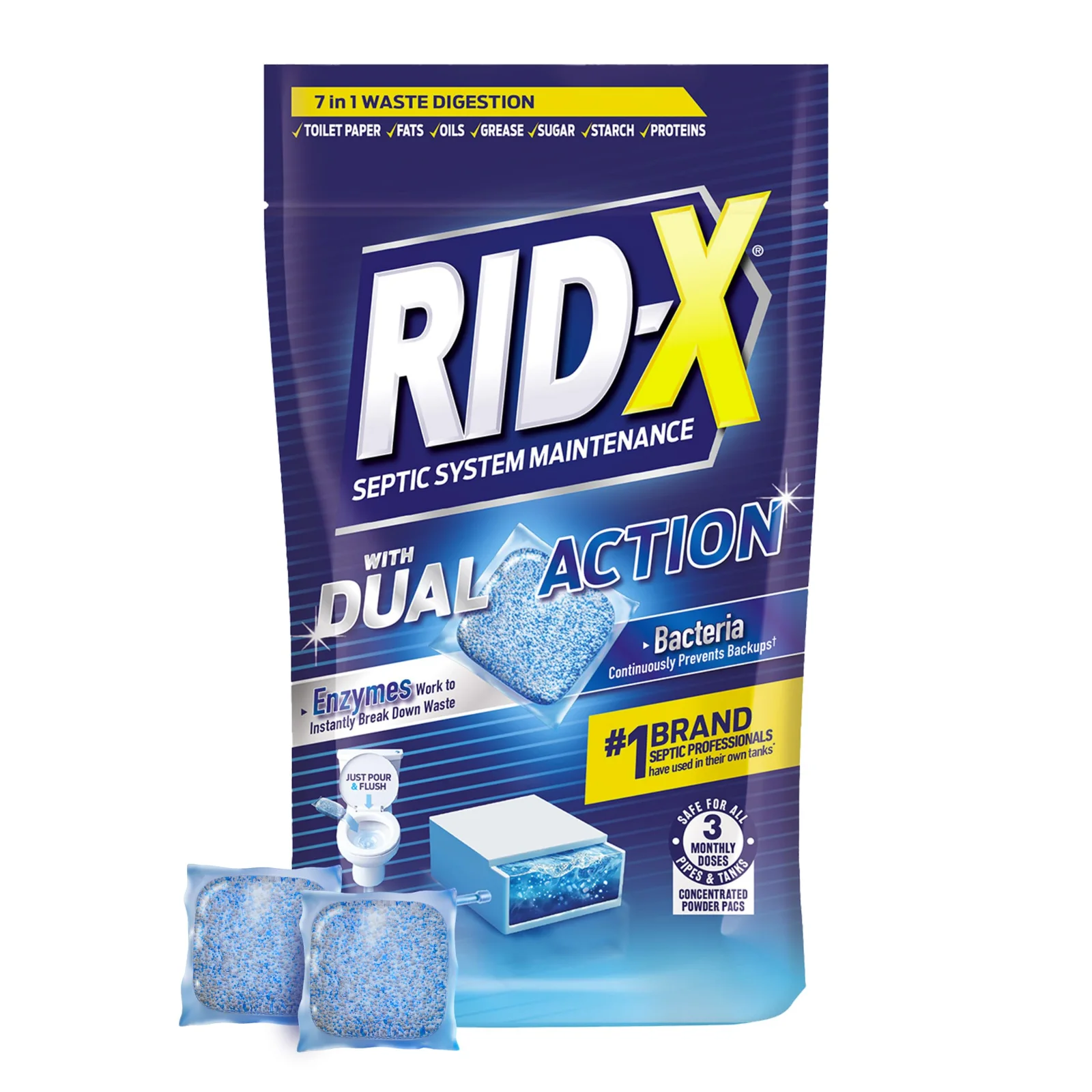
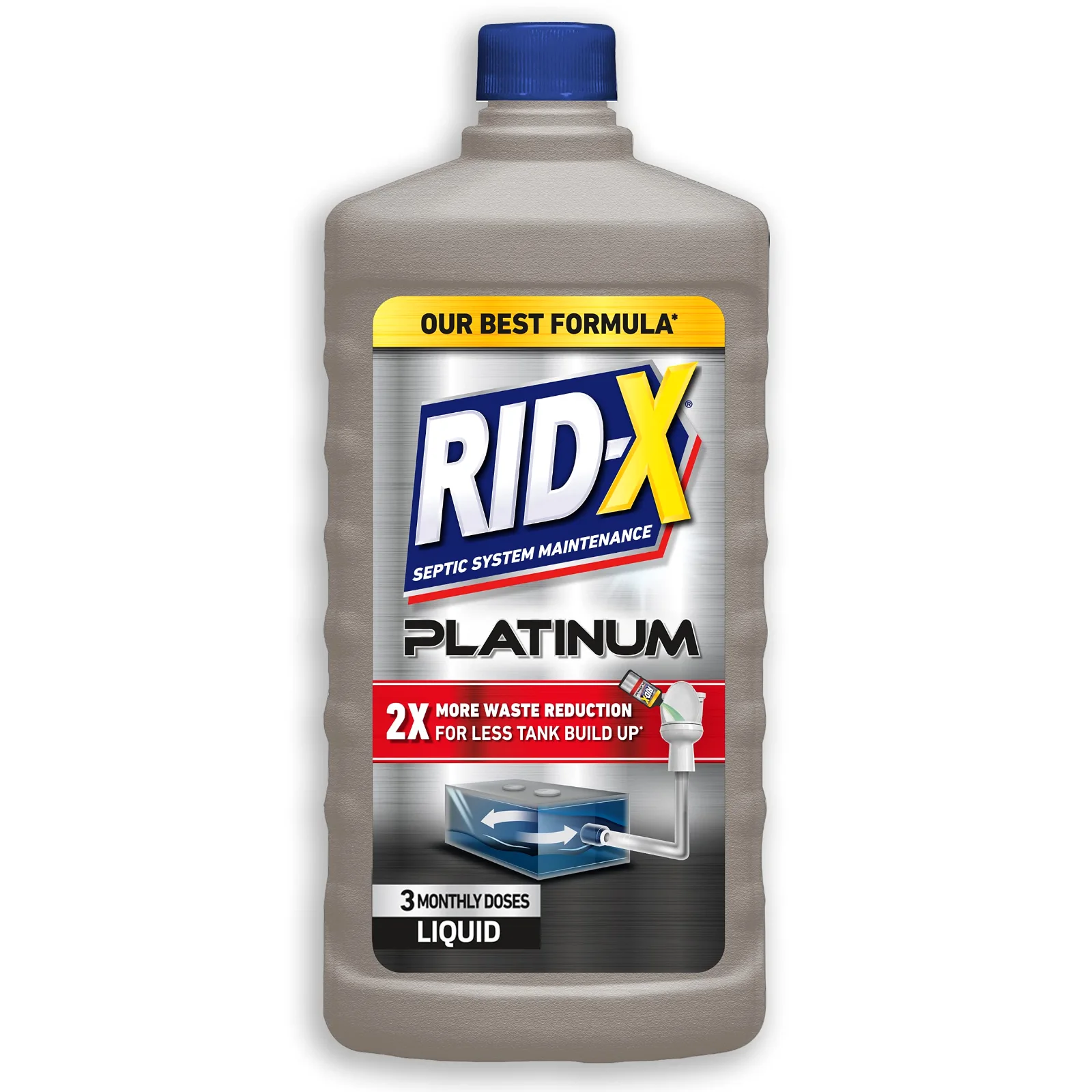
Rid-X says its pods, powder and Platinum liquid carry bacteria and enzymes that break down waste. The University of Minnesota reads a tank with low bacterial activity differently: the usual cause is too many disinfectants and cleaners going down the drain, and the cure is to use less of them, not to add bacteria. Washington State's Department of Health lists several Rid-X septic products as additives whose ingredients are unlikely to cause harm. That list is about harm, not results, and the department says so in plain words.
So if you dose once a month, treat the dose and the habits as two separate jobs. The dose itself is covered in How to use Rid-X. Regular pumping is the one thing the EPA, Penn State, Minnesota, WSU and Kentucky all name as work no additive replaces. Plan that side with the septic tank pumping schedule.
-
12 monthly doses
$3.33 per month
$39.99 for 12 months

-
12 monthly doses
$3.79 per month
$45.54 for 12 months
When habits are not enough
Careful habits do not stop a tank from filling. The EPA's FAQ lists the signs of a failing system: wastewater backing up into the house, slow drains, gurgling, standing water or wet spots over the tank or drainfield, a sewage smell near them, bright green spongy grass over the tank or field even in dry weather, algae in nearby water, and high nitrate or coliform levels in a well.
Any one of these is a reason to call a septic professional. Never climb into a tank to look. Penn State Extension warns that septic tanks contain gases that can kill, and the University of Minnesota names hydrogen sulfide, methane and carbon dioxide and adds that you should not smoke near an open lid. A smell is not always a failure, the EPA notes. A blocked or frozen vent pipe, or wind pushing air down over the roof, can carry it too.
| Item | Put it here | Not here |
|---|---|---|
| Cooking grease and oil | Cooled, in a can or jar, then the trash | Sink, toilet |
| Non-flushable wipes, such as baby wipes | Lidded bathroom bin | Toilet |
| Diapers, feminine products, condoms, dental floss | Lidded bathroom bin | Toilet |
| Coffee grounds and food scraps | Trash | Sink, garbage disposal |
| Cat litter, paper towels, cigarette butts | Trash | Toilet |
| Medicines | Ask a pharmacist how to dispose of them | Toilet, sink |
| Paint, solvents, motor oil, gasoline, pesticides, antifreeze | Your area's household hazardous waste collection | Any drain or toilet |
| Hot tub water | Cooled, onto the lawn away from the tank and field, by local rules | Septic system |
| Roof and sump pump water | Directed away from the drainfield | Drainfield |
| Cars and trucks | Driveway | Drainfield |
The habits do the daily work, whether or not a monthly the Rid-X septic and RV range dose goes down the toilet as well.
Other guides
- Guide 01
How to use Rid-X once a month
Pods, powder or liquid, once a month5 min read - Guide 02
Do septic tank treatments like Rid-X work?
What the EPA and four universities say6 min read - Guide 03
Plan septic inspection and pumping in a Rid-X house
Inspection, pumping and the signs to watch6 min read - Guide 05
Using Rid-X Holding Tank Deodorizer in an RV or boat
Dose by tank size, then dump where waste belongs5 min read